
Abrasive whitening and Friction whitening

Abrasive whitening and Friction whitening
Abrasive whitening and Friction whitening are fundamentally different processes
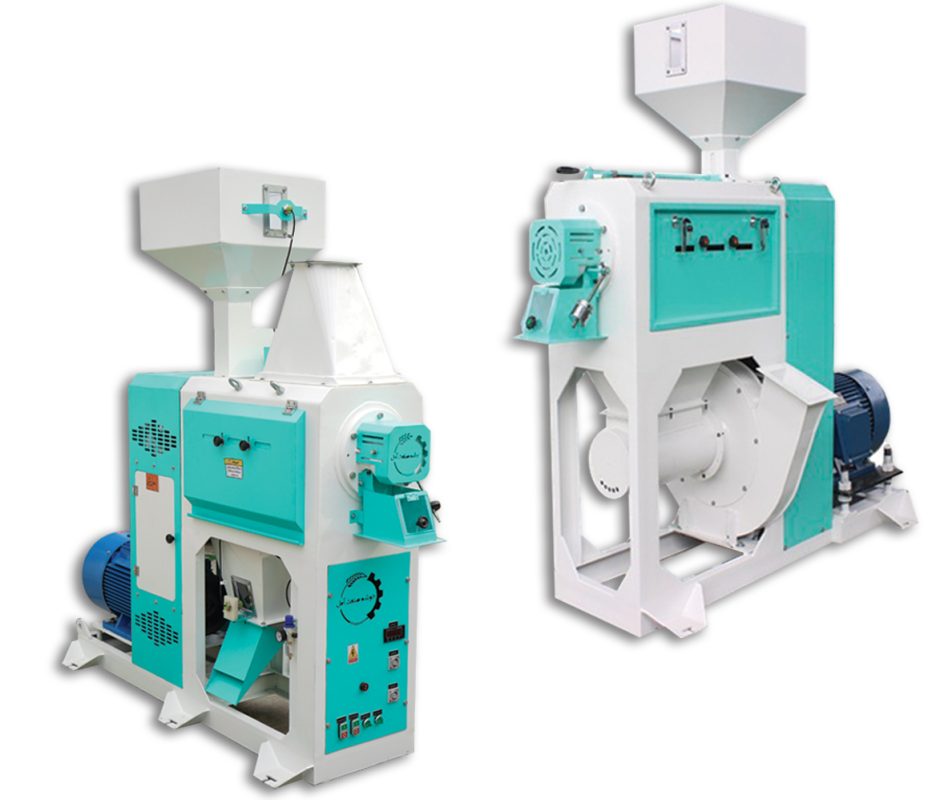
Rice milling is the core operation in rice processing. Its task is to remove part or all of the bran layer from the brown rice surface, producing white milled rice. The rice milling machine is the highest power-consuming piece of equipment on the entire processing line, and it is the decisive factor for total milled rice yield, broken rice percentage, and whiteness. The two fundamental whitening principles-friction whitening and abrasive whitening-differ completely in mechanical design, processing effect, and application scope.
Abrasive whitening and Friction whitening
Friction whitening relies on high-speed friction between individual rice kernels and between kernels and the whitening chamber screen. The frictional action progressively abrades the bran layer from the grain surface. Chamber pressure is relatively high, forming a dense grain mass that generates frictional heat and detachment force. The main advantage of friction whitening is a smooth, glossy finished surface-well-suited for varieties with dense endosperm structure. The downside is equally clear: when chamber pressure climbs too high or grain strength is insufficient, the broken rice rate increases sharply. Friction whitening typically operates with a low spindle speed and high chamber pressure configuration, making it suitable for short-grain japonica rice and medium-grain varieties.
Abrasive whitening and Friction whitening
Abrasive whitening, by contrast, uses a rotating emery roller or grinding wheel mounted on a high-speed spindle. The abrasive action of countless silicon carbide grits cuts away the bran layer like microscopic blades. This is an open-chamber whitening method-the grain density inside the chamber is lower and no dense friction layer forms. The core advantage is the reduced mechanical stress on each kernel, producing less broken rice and achieving a higher head rice yield. This makes abrasive whitening especially suitable for long-grain varieties with fragile endosperm structure, such as Basmati and jasmine rice. However, the surface of abrasively-milled rice is comparatively rough and less glossy, so a subsequent polishing step is generally required to improve appearance.
Abrasive whitening and Friction whitening
In terms of machine configuration, the market today offers two mainstream types: vertical rice milling machines and horizontal rice milling machines. In a vertical mill, the spindle is mounted vertically and the grain flows downward by gravity, creating uniform chamber pressure and generating less broken rice. The tradeoff is a taller machine footprint that requires higher ceiling clearance. In a horizontal mill, the spindle is mounted horizontally and the grain moves by auger feed and centrifugal force. The footprint is more compact, making it easier to arrange multiple machines in series, but the chamber pressure distribution is less uniform than in vertical mills, and localized pressure spikes can produce more broken rice.
Abrasive whitening and Friction whitening
For buyers selecting a rice mill for their processing line, the first decision point is the target market’s requirement for grain appearance. If the line processes long-grain rice destined for a premium market with strict broken rice limits, the recommended choice is abrasive whitening machines. A high-end processing line today typically adopts a multi-pass light-milling configuration: two to three passes of abrasive milling to remove the bulk of the bran layer, followed by one pass of polisher milling for surface finishing. This arrangement achieves the optimal balance between high head rice yield and excellent whiteness.
Watch KhoosheSanat Company videos
Click on the word “Products” to view the products of khooshesanat Company.